
We do not start a drainfield job with an excavator. We open the tank, check its level, and work downstream. An overdue tank, clogged filter, shifted distribution box, failed dosing pump, or saturated soil can all produce a slow house and wet yard.
We start by checking the tank level
The liquid level gives us the first useful split. A level above the outlet points downstream toward a blocked line, pump problem, distribution part, or field. A normal tank level with an indoor backup points back toward the building sewer or inlet. Sludge near the outlet suggests that solids may have reached the field. Each finding narrows the next test.
We do not dig wet treatment soil
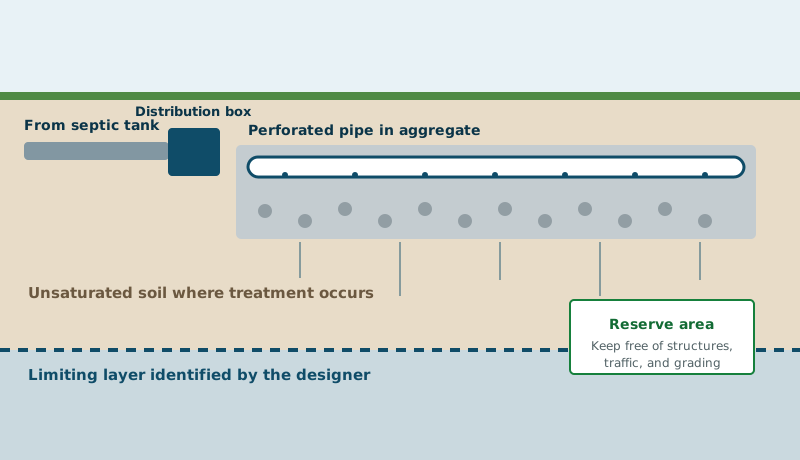
Vermont distinguishes in-ground, at-grade, and mound fields because soil texture, seasonal groundwater, and bedrock control treatment. In-ground beds cannot be placed in sandy clay, silty clay, or clay. State rules also stop field construction when soil at roughly eight inches deep is wet enough to roll into a wire. Working saturated soil can smear and compact the surface that needs to accept effluent.
Some field problems have limited repairs
A broken outlet pipe, clogged effluent filter, damaged distribution box, failed pump, or isolated crushed lateral may be repairable without rebuilding the entire field. We explain what we opened, how we isolated the trouble, and whether the fix changes the permitted design. A different system type or relocated field needs a designer and a permit amendment.
Spring water can slow a healthy field
Snowmelt and rain can fill soil pores that normally accept effluent. Roof drains and sump outlets aimed at the field add clean water to the same problem. Cut household flow, move surface drainage away, and keep vehicles off soft ground. A wet-weather slowdown does not prove permanent failure, but sewage surfacing at grade needs prompt attention.
When not to order drainfield replacement
Do not replace a field because one toilet is slow, because an alarm sounded once during a power outage, or because standing water appears in an unrelated low spot. First rule out the building drain, tank level, filter, pump, and surface-water routing. Replacement becomes a designer conversation when the permitted field cannot accept normal flow, wastewater repeatedly surfaces, or repair cannot restore the approved distribution.
Have the permit plan ready
Find the DEC permit, recorded plan, prior inspection, and pumping history. Mark wells, utilities, tank lids, pump controls, and the suspected field. Tell us whether every fixture is affected and whether the problem changes after rain. Good records keep test holes out of the wrong part of the yard and help protect the required replacement area.