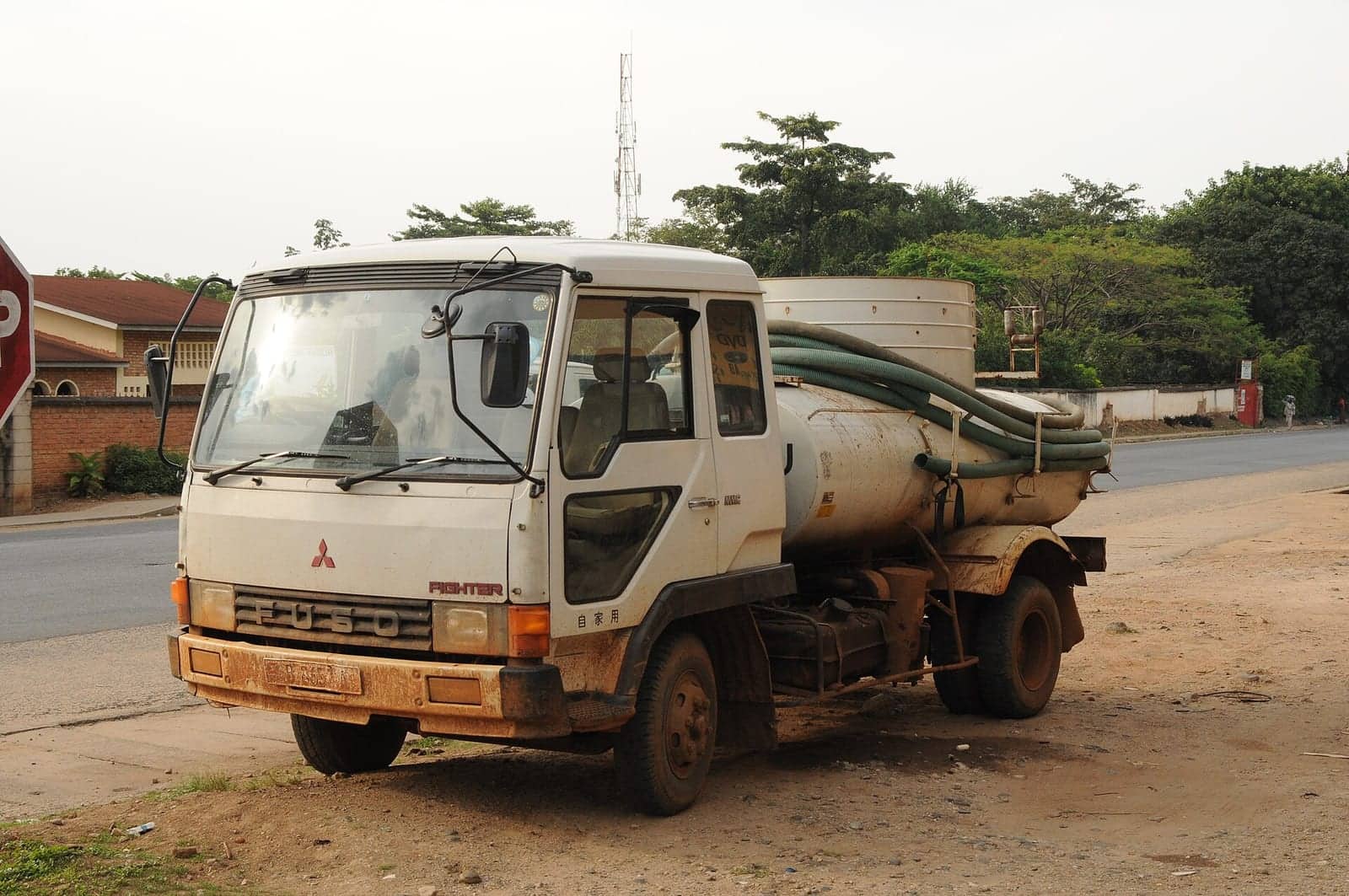
We pump through the main access, remove floating scum and settled sludge, and reach every accessible compartment. While the level is down, we look at the inlet, outlet, filter, lids, and tank walls and tell you what we found.
Why a tank needs pumping
Wastewater separates into floating scum, a liquid middle layer, and settled sludge. New flow pushes liquid toward the outlet while baffles and an effluent filter hold back the upper and lower solids. The clear middle zone shrinks as both solid layers grow. Vermont requires pumping before settleable solids and scum can escape downstream.
We open every accessible compartment
We locate and open safe access points, remove liquid and solids, and check whether an internal wall hides another compartment. Pumping only through a small inspection port can leave material behind and blocks a clear view of the components. A rinse or backflush may loosen compacted sludge; the job is to remove the buildup, not polish away every trace of bacteria.
What we check while the tank is empty
The outlet baffle keeps scum out of the field. The effluent filter catches finer solids and must be cleaned before it blocks. Risers and lids keep people and surface water out. Cracks, displaced covers, roots, and groundwater leaks are easiest to see while the level is low. We report the problem without treating every flaw as a reason to replace the tank.
Snow and buried lids add time
Burlington’s normal seasonal snowfall is roughly 80 inches. A lid under plowed snow or frozen fill takes longer to find and uncover than a riser at grade. Mark access before winter and keep the route clear without driving across the field. Tell us about gates, steep drives, hose distance, and the number of lids so the truck can stay on firm ground.
When you may not need a pump-out
One slow sink, a localized toilet clog, or a sewer-connected Burlington address does not call for a septic truck. If the property uses municipal wastewater, call the City for a public-side sewer problem and a plumber for a private building drain. On septic, recent measured solids and a normal operating level may point toward a filter, pump, or plumbing issue rather than another full pump-out.
Keep the pump receipt and tank notes
Save the service date, approximate volume, access locations, measured sludge and scum if taken, filter condition, and any repair recommendation. Keep that record with the permit plan. Household size, tank capacity, food-waste grinding, and seasonal use change the buildup rate, so the next service date should reflect this tank rather than a generic calendar.