We handle common tank-side repairs: unsafe lids, leaking risers, damaged inlet or outlet parts, clogged filters, and groundwater coming through joints. Pumping gives us a clear look. We fix the part we can see and stop when the job needs structural work, a designer, or a permit.
Lid and riser repairs are different from tank failure
A damaged riser or cover may be replaced while the buried tank remains serviceable. A displaced inlet boot or accessible outlet part may also have a limited repair. Deep wall cracks, severe concrete deterioration, deformation, or leakage can point toward tank replacement. We expose enough of the part to understand the support and seal before covering it again.
Baffles and filters protect the field
The inlet directs flow without disturbing settled solids. The outlet baffle and effluent filter keep scum and fine material out of the field. A missing outlet device may not cause an immediate indoor backup, yet it can increase downstream solids loading. Filter cleaning is maintenance under Vermont’s rule. Rebuilding the outlet or changing tank configuration may require permit review.
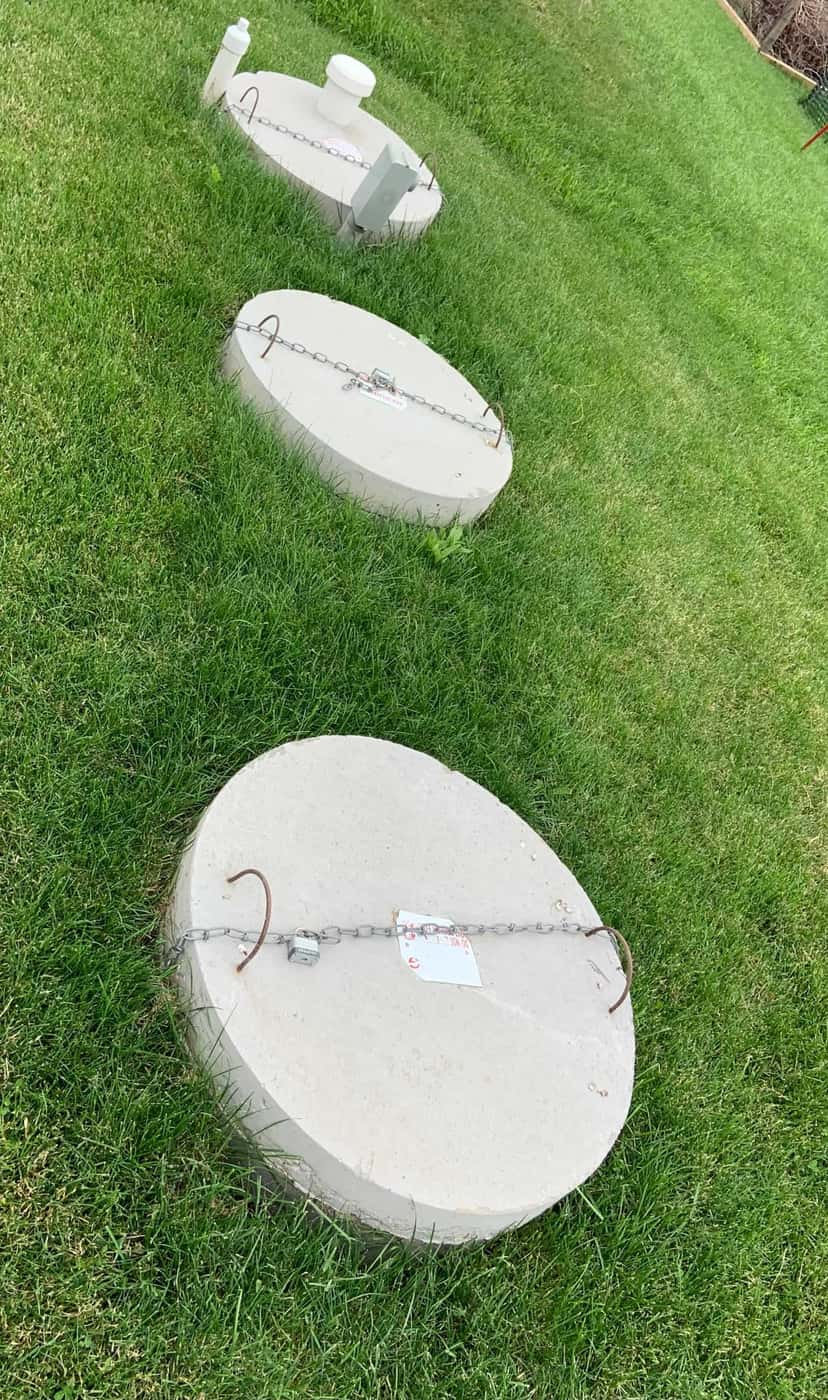
Risers must stay secure and watertight
A riser brings service access to grade and avoids repeated digging. Its joints should resist surface water and its cover must be tight fitting and designed to prevent child entry. Do not hide an unsafe opening under a loose landscape lid. In snow country, a marked at-grade access also reduces frozen excavation and keeps future crews from searching across the yard.
Clear groundwater can overload the system
Water streaming through a crack or joint fills tank capacity and sends extra volume to the field. It may show up during snowmelt even when household use has not changed. Pumping without sealing or replacing the failed part only creates space that groundwater fills again. We note the entry point while the level is down and compare repair options with the tank material and permit.
When not to repair the tank
Do not replace a tank lid to solve a high-water alarm in a separate dosing chamber. Do not patch a tank that has lost structural integrity without engineering support. Do not assume a wet field is fixed because an outlet filter was dirty. Each may be a real maintenance item, but the system should be traced from building sewer through tank, pump, distribution, and soil before claiming the root cause is resolved.
Some repairs need DEC review
Vermont requires a permit for physical modification or replacement of a wastewater system, subject to exemptions and the existing approval. A designer prepares required permit plans. Ask DEC’s Essex office whether structural work counts as maintenance, exempt reconstruction, or a permit action. We list that requirement in the estimate instead of burying it in a general repair promise.