
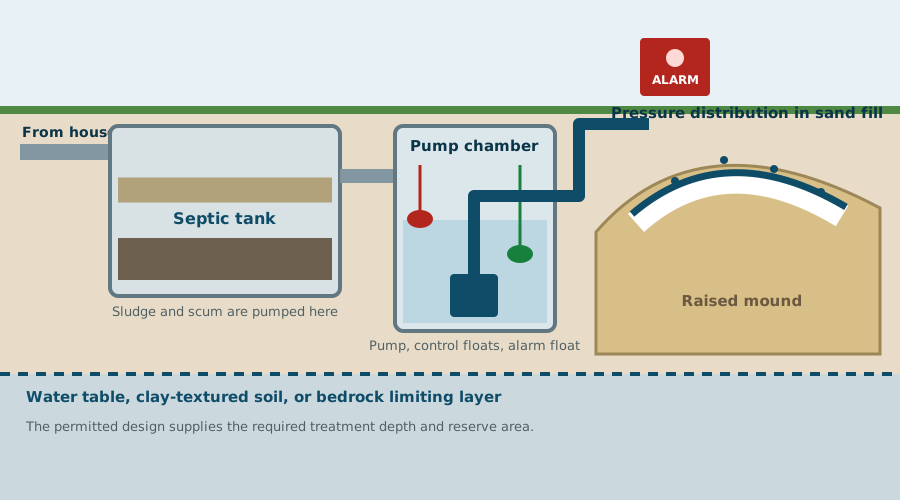
We service mound systems by starting at the settling tank and following the flow through the pump chamber. Some properties have two separate tanks; others divide one structure into compartments. We check the visible floats, alarm, and access points along with the routine pump-out.
Why Vermont homes use mound systems
Vermont uses a mound where the natural soil profile cannot provide the treatment depth required for an in-ground field. Under the 2023 state rules, a standard mound design uses fill to establish vertical separation from an induced water table, clay-textured soil, and bedrock. The raised shape is an engineered treatment area, not leftover excavation soil. Water must reach it in controlled doses so the distribution network can spread flow rather than soaking one end.
- Water table
- The standard mound criteria establish 36 inches of separation to the induced water table.
- Clay-textured soil
- The rules use a 36-inch fill separation for sandy clay, silty clay, or clay.
- Bedrock
- A standard mound establishes 48 inches between its infiltrative surface and bedrock.
We check both sides of the system
Settled sludge belongs in the septic tank, not in the pump chamber or pressure network. The pumper opens all accessible compartments, removes solids from the settling side, and records unusual carryover. If the dosing chamber contains heavy solids, the outlet filter, baffle, or separation between compartments may need attention. The pump chamber level should not be changed blindly because floats and alarms are set around a designed operating range.
What a high-water alarm can mean
An alarm can follow a tripped breaker, stuck float, failed pump, blocked force main, frozen line, or a field that is accepting doses too slowly. Silence the audible signal only after noting the warning light and liquid level. Reduce water use until the cause is known. Repeatedly resetting a breaker can damage equipment and does not address a jammed pump or electrical fault.
Keep trucks and runoff off the mound
Keep snowplows, parked vehicles, sheds, and stockpiled soil off the mound and its downgradient dispersal area. Compaction changes the soil structure that accepts and treats effluent. Direct roof and sump discharge away from the toe. During a wet thaw, the yard may look soft before the system has failed; keep equipment on a firm drive and use hose length instead of creating ruts across the treatment area.
When you need a pump technician or designer
Call a pump technician when the alarm is active and the tank was serviced recently. Call a Vermont wastewater designer when a permit drawing is missing, an addition changes design flow, or the field needs relocation. Call DEC when the question is whether a repair requires a permit. Pumping is appropriate for accumulated solids and for access during diagnosis, but it cannot prove that buried pressure laterals distribute evenly.
What to tell us when you call
Share the address, the permit or plan if available, the number of visible lids, the alarm status, and the last pump date. Mention whether the house has lost power, whether drains are backing up, and whether liquid is surfacing near the mound. Those facts separate scheduled maintenance from pump, electrical, or drainfield work before a truck heads into the yard.